

Turn Technique and Precision: Using the Foldable Barrier in Agility
In modern Agility, the difference between a podium finish and a penalty is often measured in centimeters and milliseconds. One of the greatest challenges for the handler-dog team is managing turns after high-speed obstacles, such as tunnels or jumps. This is where the Agility Level Foldable Barrier becomes an indispensable training tool.
What is its technical purpose?
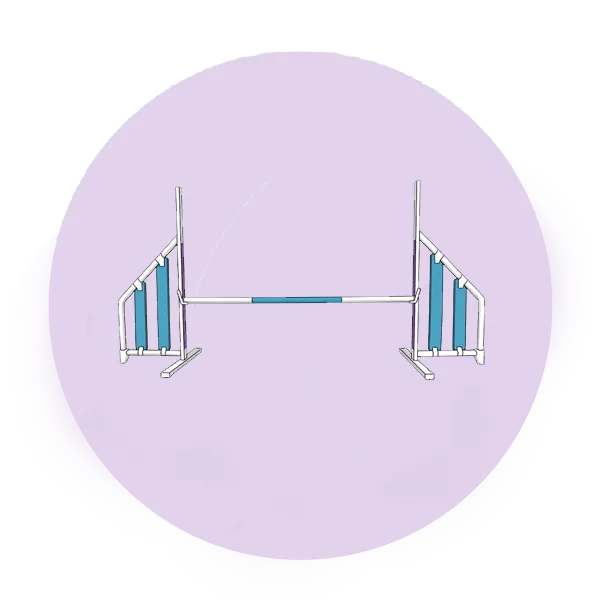
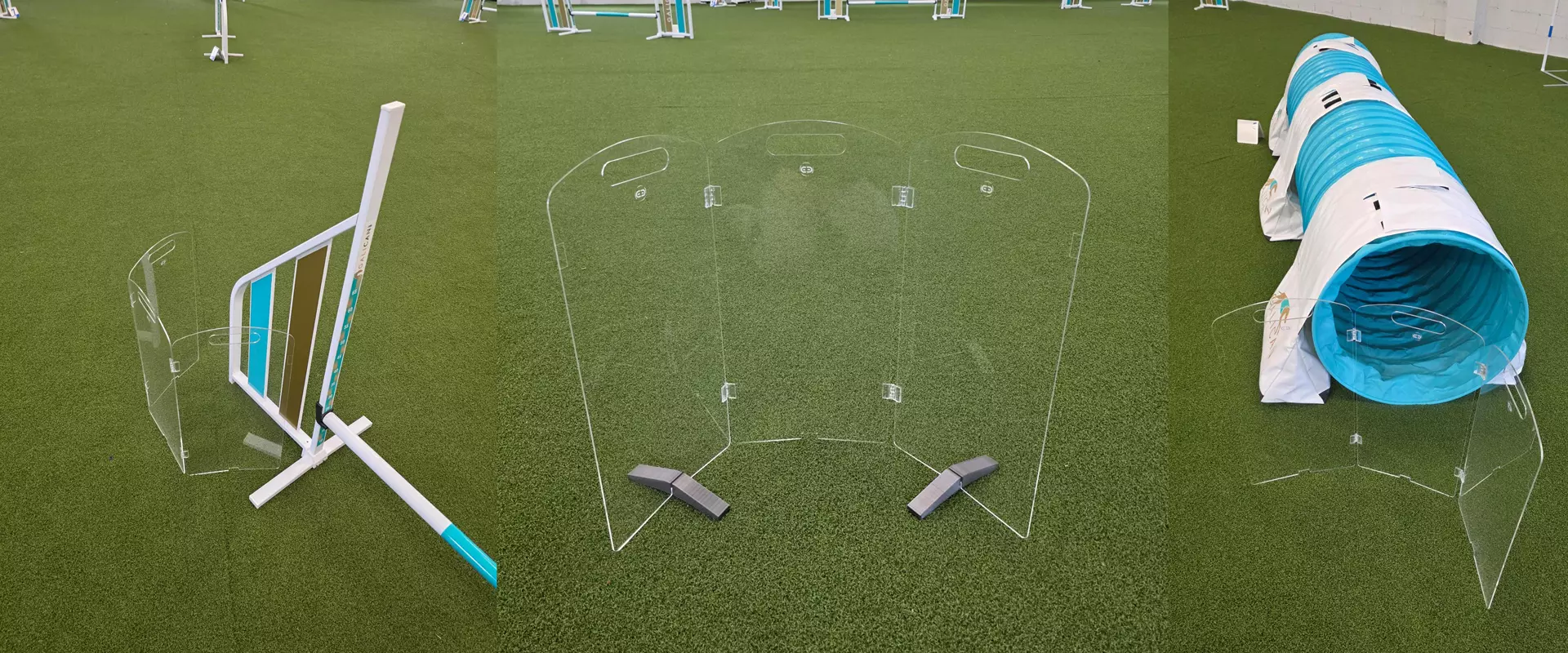
The barrier is not a competition obstacle but a trajectory regulator. Its primary function is to help the dog understand and execute tight turns efficiently, preventing the dog from "swinging wide" when exiting an obstacle.
It is strategically placed at the end of a tunnel or at the side of a jump to:
Close the exit angle: It forces the dog to seek a tighter line toward the next obstacle.
Train proprioception: The dog learns to adjust its body and weight distribution before completing a jump or exiting a tunnel.
Prevent "run-outs" due to drifting: It helps channel the dog's energy toward the handler, improving visual connection in the middle of the run.
Terrain and Training Configurations
The versatility of the Agility Level Barrier allows the equipment to adapt to any environment thanks to its modular accessories:
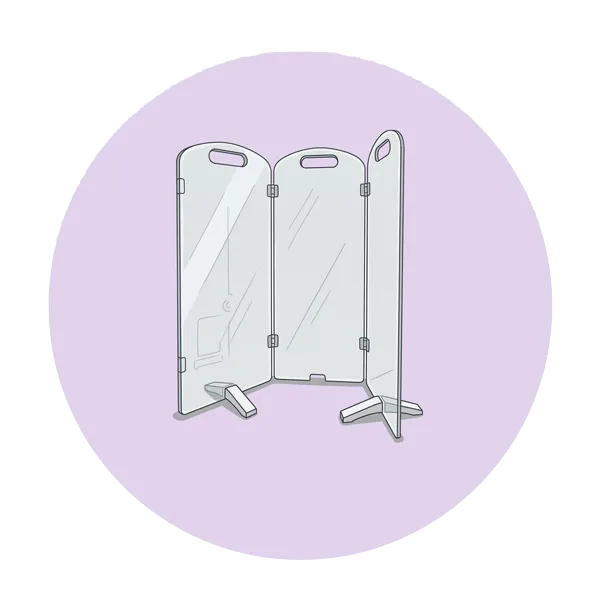
Barrier Only (3 Panels): Ideal for indoor training or technical matting where a lightweight, easy-to-move element is needed to adjust trajectories in real time.
Barrier + Feet: Recommended for indoor floors or hard surfaces. The feet provide the necessary stability to keep the barrier firm without the need for anchors, allowing for safe use in sports halls or garages.
Barrier + Spikes: The ultimate choice for natural grass. The 6mm acrylic spikes pin firmly into the ground, ensuring the barrier doesn't shift, even with wind or if the dog brushes against it at high speed.
Barrier + Feet and Spikes: The complete kit for trainers working on multiple surfaces (artificial turf, uneven ground, or indoors). Maximum stability guaranteed in any condition.
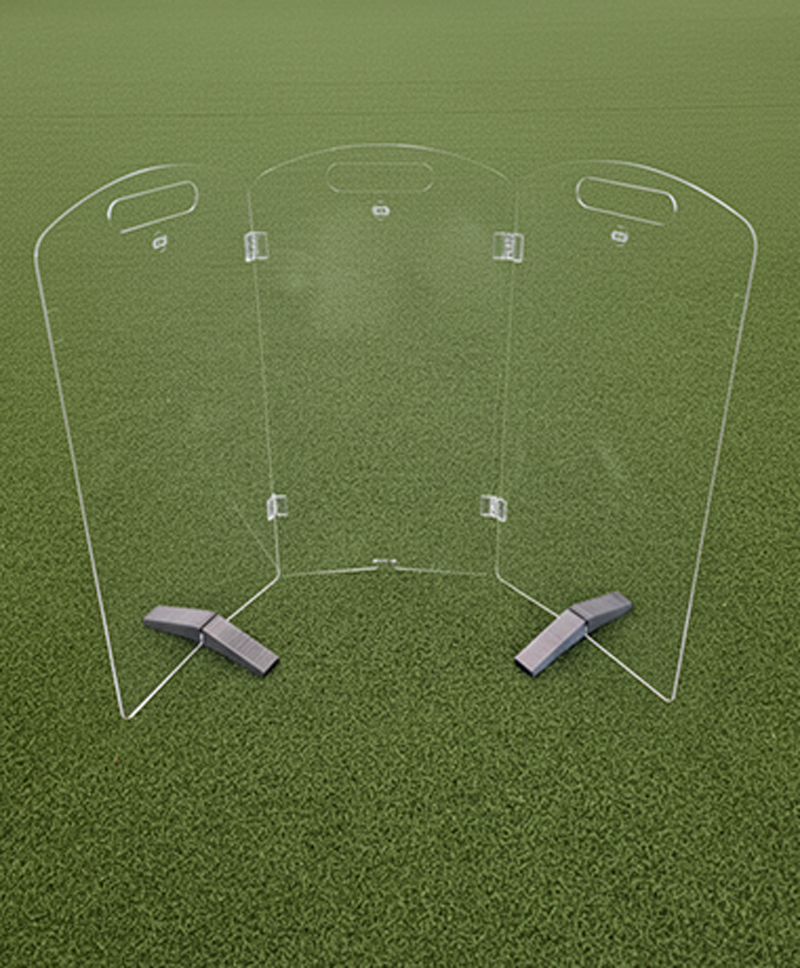
The "Screwless Design": A Key Factor on the Field
True to the Agility Level philosophy, this barrier features an innovative screwless design. In a technical environment, this means:
Safety: No metal edges or small parts that could injure the dog’s paw pads or get lost in the grass.
Efficiency: Assembly is quick and intuitive, allowing the handler to change the course layout without breaking the rhythm of the training session.
Conclusion
Whether you are teaching a puppy not to "overrun" at the tunnel exit or shaving seconds off a competition dog's slalom turns, the Foldable Barrier is the logical investment for those seeking precision. Its lightweight nature and folding capacity also make it the perfect accessory to take to any seminar or competition.
Who is it recommended for?
The Foldable Barrier is not just for experts; its modular design makes it useful at various stages of training:
Puppies and Beginners: It is the perfect tool to lay the foundations of proprioception. It helps young dogs understand that they won't always run in a straight line, teaching them to collect their stride and prepare their body for the turn before exiting the tunnel.
Solo Trainers: If you don't have anyone to act as a "buffer" or to mark the trajectory, the barrier acts as a passive physical guide. It allows the handler to position themselves further ahead in the course while the barrier takes care of correcting the dog’s line at the previous obstacle.
Competition Dogs (Grade II and III): Recommended for teams looking to shave tenths of a second off the clock. It is ideal for polishing "U" or "S" turns, forcing the dog to keep its shoulders low and hind legs well-positioned for an explosive exit.
Agility Clubs and Schools: Due to its screwless design and durability, it is a smart investment for centers with a high volume of students. It folds and stores in seconds, optimizing space at the club.
Multi-surface Trainers: Thanks to its feet or spikes options, it is the number one recommendation for those who give seminars and travel from natural grass fields to indoor carpeted or artificial turf arenas.